AI infrastructure is moving quickly, and many of the questions facing the industry are practical: how much density a facility can support, and how to make sound decisions while the technology is still changing. For data centers, the answer is to create environments that can keep performing as customers’ needs and the supporting technology evolve.
Liquid cooling is a useful example. It is changing high-density environments without a single established blueprint, showing why the ability to adapt now matters as much as the technology itself.
Infrastructure that evolves
Data centers have traditionally been designed around solid assumptions that stayed stable for years. Workloads and rack densities could be defined early, while cooling technologies were carried into operation with limited change from year to year.
AI is upending that model. Higher-density hardware is forcing infrastructure teams to reconsider how cooling, power and network design work together as deployments become larger and more complex.
At the leading edge of technology, customer requirements will continue to evolve as new solutions create opportunities to improve efficiency and increase output from the same infrastructure. Our role has been and is to work actively with customers to define and fix the elements that need certainty, while deliberately preserving flexibility where further innovation can create value. That means designing for evolution rather than treating change as an exception.
Liquid cooling in practice
Liquid cooling makes that process visible. The right design depends not only on the hardware and required density, but also on what the customer is trying to achieve. Some organisations prioritise resilience, while others focus on speed of deployment, operational simplicity or the ability to scale over time. The engineering challenge is balancing those priorities within an environment that will perform reliably over the long term.
As AI deployments become larger and more complex, those decisions are increasingly interconnected. Choices about cooling affect power architecture, operational requirements and future expansion. The objective is not simply to deploy liquid cooling, but to create an environment that supports the customer's broader infrastructure strategy.
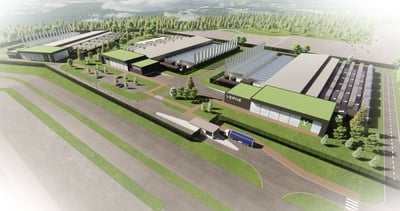
Because Verne designs, builds and operates its own data centers, those decisions remain grounded in operational reality and experience from live environments then informs the next generation of designs.
Engineering judgement in action
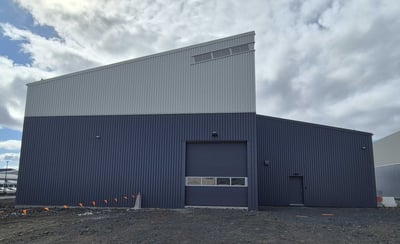
A recent customer deployment in Iceland illustrates the point. The customer needed a resilient cooling architecture without introducing unnecessary operational complexity as the deployment scaled.
The team assessed CDU (Coolant Distribution Unit) configuration and resilience before selecting a repeatable design with groups of four CDUs feeding a common header. Three provide required capacity during normal operation; the fourth provides redundancy. During the transition from utility power to generator power, all four units can support cooling as incoming water temperature begins to rise.
Rather than adding additional buffer vessels and supporting infrastructure, the solution achieved the required resilience through a simpler architecture. The result was a system that met the customer's operational requirements while reducing complexity and supporting future growth. The decision was supported by RAM analysis and reinforced by Iceland’s stable geothermal power system.
The important point is the process behind the equipment choice: looking at the system, testing operating assumptions and grounding the answer in how the environment would behave.
Customer priorities and partner expertise were brought together with Verne’s design and operational experience. That is the engineering judgement AI infrastructure needs: careful enough to manage complexity while staying practical enough to keep projects moving and long-term performance in view.
Designing for what comes next
Liquid cooling will not be the final transition AI brings to data center infrastructure. The industry is already looking ahead to 800V DC power architectures for high-density AI environments.
The challenge is different, but the process will be familiar.
We cannot design every future environment around technology that has yet to arrive or assume today’s’ architectures will stay fixed. What we can do is establish strong foundations and keep enough judgement and flexibility in the process to make clever and collaborative decisions.
At Verne, we call this Natural Intelligence: combining technical expertise with practical experience to move forward with customers and partners.
The next generation of AI infrastructure will be built by those ready to evolve with it.
.jpg?width=400&height=255&name=Headshot%20Tate%20Crossed%20(1).jpg)
.jpg?width=400&height=255&name=Headshot%20Tate%20(1).jpg)
.jpg?width=400&height=255&name=Headshot%20Anne%20(1).jpg)

.png?width=400&height=255&name=Mantsala%20Visual%2009.06.2026%20(002).png)