For most of their history, data centers have existed largely out of sight.
They have quietly powered the digital economy from behind the scenes, but few people paid much attention to where they were located, how they operated or what role they played in everyday life. That is no longer the case.
The rapid growth of AI has pushed digital infrastructure into the public spotlight. Governments are thinking more strategically about technology and resilience of the digital economy. Businesses are reassessing their digital strategies. Communities are asking questions about new developments. Journalists are examining the environmental impact of the infrastructure underpinning our increasingly digital world. This scrutiny is both understandable and welcome.
A growing challenge for the data center industry is that public understanding has not kept pace with the industry's growth. As a result, complex issues often become condensed into simple narratives: Data centers consume too much power. Data centers use too much water. Data centers are a burden on local communities. These concerns deserve discussion, and part of that discussion has to be context.
Moving beyond the water consumption narrative
Water is understandably one of the most sensitive issues surrounding data center development. It is a vital shared resource, and communities have every right to ask whether new infrastructure will place additional pressure on local supplies.
However, water consumption is not uniform across the industry. A data center built in a hot, water-constrained region faces very different challenges from one operating in a naturally cool environment.
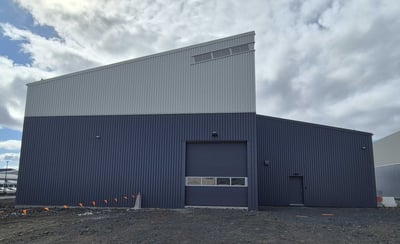
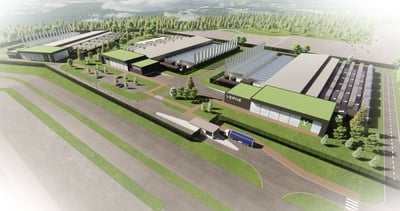
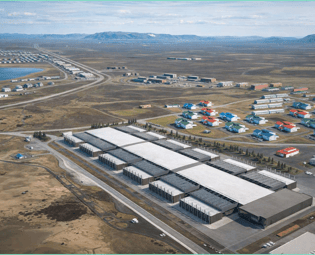
The computers housed within data centers generate heat. For many years, this heat has been dissipated by air-cooled systems, but cooling technology has evolved significantly. Closed-loop liquid cooling systems, which increasingly dominate the cooling capability of modern data centers, recirculate coolant, minimising the use of water required to support increasingly power-dense AI and high-performance computing workloads. Verne's facilities in Iceland and Finland use closed-loop liquid cooling systems.
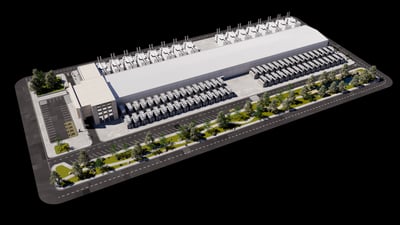
For context, Verne's Helsinki data center in Finland used just over 500k litres of water in 2025. According to figures from the Environment Agency and Water UK, the average UK household consumes between 110k and 135k litres of water each year. That means the annual water consumption of our facility is equivalent to four to five average UK households.
This does not mean water use should be dismissed, nor does it suggest that every data center operates with a similar resource profile. Cooling design, climate and local water conditions all influence consumption, which is why water stewardship is driven by decisions about where a facility is built, what cooling technologies are deployed and how it is operate.
Power is the debate we should be having
Data centers require power, and demand will continue to grow as AI adoption accelerates and digital infrastructure becomes more deeply embedded across every sector of our economy. Operators should acknowledge that reality plainly.
According to the International Energy Agency, data centers currently account for approximately 1.5% of global electricity consumption. That number alone attracts attention.
It is important to acknowledge that this consumption underpins every online transaction, cloud application, video call, streaming platform, logistics network, insurance claim and AI-powered service. The list is endless. Digital infrastructure is part of the operating fabric of the world in which we live.
Roads, airports, electricity grids, water networks, fibre networks and railways are all forms of critical infrastructure that underpin modern society. We expect them to exist, run perpetually and certainly notice when they do not. Digital infrastructure is no different. Imagine a world without the utility of our digital economy.
In a world ever more reliant on data centers, the increasingly important questions are around how they are powered, what type of energy supports them, how efficiently they are operated, and how facilities are designed to reduce avoidable impact. This is where data center operators have the greatest influence, and where the distinction between one facility and another becomes critical.
Not all power is created equal
The environmental impact of a data center is significantly shaped by how much electricity it uses, but also by how that power is generated, delivered and managed over time. A data center connected to a fossil-heavy grid will carry a significantly different carbon profile from one supported by renewable or low-carbon power.
As data center operators and organisations work to reduce emissions across their technology footprint, power availability, grid carbon intensity and long-term energy security are becoming central to infrastructure decisions. This is one of the reasons the Nordic region is increasingly relevant for AI and high-performance computing workloads.
Nordic Energy Research estimates that around 96% of electricity generation across the Nordic region is fossil-free. For digital infrastructure, this energy context has a direct bearing on environmental impact.
Verne's Iceland and Finland facilities operate on renewable electricity, while more than 90% of the company's overall power consumption comes from low-carbon national grids. Naturally cool climate conditions also help reduce dependence on energy-intensive mechanical cooling systems.
This does not remove the environmental impact of digital infrastructure. However, it does highlight why the specific local conditions of a data center facility matter, from the carbon intensity of the grid to the climate that enables more efficient cooling. It is not the only factor in more sustainable operations, but here also location shapes many of the decisions that determine a facility’s long-term resource profile.
Responsible development starts with responsible location decisions
A common concern is that data center growth inevitably means building on green fields and natural landscapes. The evidence points to a more balanced picture. JLL found that greenfield sites accounted for just 8% of European data center projects delivered between 2022 and 2025, but are expected to represent 39% of the 2026–2028 pipeline by project count.
That matters because it shows greenfield development is not the default. In many cases, responsible development starts with sites already shaped by industrial or infrastructure use, where power access, transport links and supporting services are in place. But, land use still deserves careful scrutiny. Every development should be assessed on its own merits, including biodiversity, planning context, local infrastructure and community needs. As with energy and water, good decisions around location have a direct bearing on environmental performance.
The industry must become better at explaining itself
There is another reason misconceptions persist: the industry has not always explained itself plainly enough.
Greater trust for the data center industry requires the industry to be clear about what resources it consumes, why those resources are needed and what is being done to reduce avoidable impact.
It is also necessary to explain the importance of the utility created by the data center industry more clearly to support the services people rely on every day: the hospital systems, financial platforms, communications networks, public services and AI tools that now sit behind modern life.
A more informed conversation
Scrutiny of data center development should continue. It pushes the industry to be clearer, more accountable and more disciplined in the choices it makes.
But progress depends on moving past simple narratives and looking at the practical decisions that shape impact such as energy sourcing, cooling design, facility efficiency and site selection.
That is the conversation the industry needs to make easier to have: grounded in evidence, clear on trade-offs and focused on how better infrastructure choices are made.

.jpg?width=400&height=255&name=Headshot%20Tate%20Crossed%20(1).jpg)
.jpg?width=400&height=255&name=Headshot%20Tate%20(1).jpg)


.png?width=400&height=255&name=Mantsala%20Visual%2009.06.2026%20(002).png)