Europe ends 2026 with no shortage of AI ambition.
Governments want greater technological capability. Enterprises are moving from experimentation to deployment. Hyperscalers, neoclouds and model developers all need more compute.
In 2027, the question is how much of that demand Europe can turn into operational capacity.
AI is increasing the scale and density of infrastructure requirements. Individual deployments can need tens or hundreds of megawatts, while equipment demands more power and increasingly specialised cooling.
Customers want capacity quickly, but the transmission grids, substations and planning systems behind it move at a different pace. Europe’s infrastructure challenge is a widening delivery gap between market demand and capacity that can credibly come online.
Closing that gap will determine where investment goes next.
Available power must also be deliverable
Europe needs more electricity generation, but generation is only one part of the problem.
Power must be available in the right location and supported by sufficient network capacity. A country may generate enough electricity overall while lacking the transmission infrastructure needed to serve a major development in a particular region.
For customers planning AI deployments, power that cannot be connected for several years is not available in any commercially useful sense.
Grid operators are responding through connection queues, project-maturity tests and prioritisation mechanisms. Finland provides one indication of the direction of travel. Proposals published in September 2026 would divide large electricity users into four priority groups for new connections. Data centers drawing more than 10 MW would generally enter the third group, although a substantial flexibility commitment could move a project into the second. Similar assessment frameworks are under consideration in many European countries. As another example, Norway paused all new grid connection applications until mid 2027.
There is a sound principle behind closer scrutiny. Scarce grid capacity should support credible projects rather than remain tied up by speculative applications. But these rules also influence commercial viability. Connection policy is becoming industrial policy because it will affect where major infrastructure investment can proceed.
That places a premium on deliverability. The strongest projects will be those able to demonstrate secured power, credible connection dates and the technical ability to support the equipment customers intend to deploy.
Europe has ground to make up
The scale of the opportunity becomes clearer when Europe’s current position is considered.
The International Energy Agency estimates that Europe accounted for 15% of global data center electricity consumption in 2024. The US accounted for 45% and China for 25%. These figures cover the full data center market rather than AI alone, but they provide a useful indication of where the world’s digital infrastructure is concentrated.
That imbalance could begin to shift.
North America is finding it increasingly difficult to deliver capacity at the rate customers require. Across CBRE’s eight primary North American markets, more than 80% of capacity under construction in the first half of 2026 had already been pre-leased. Vacancy remained at 1.4%, even as total supply grew by 33.7% year on year, while power constraints continued to extend delivery schedules.
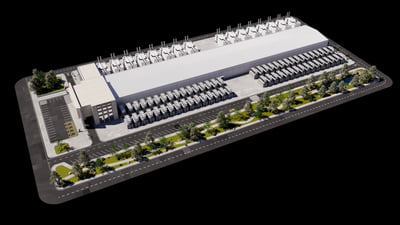
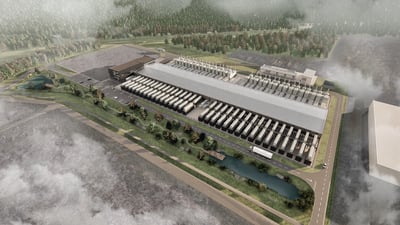
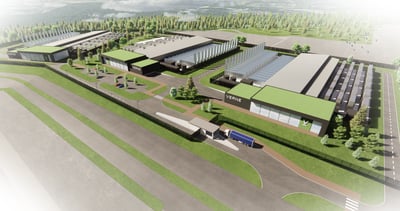
Some global customers will therefore look more closely at Europe. The EU is also seeking to build its own capability through the AI Gigafactories initiative, intended to support very large infrastructure for developing advanced AI models. The planned Verne campus in Île-de-France is among the sites supporting the AION consortium’s bid for a French AI Gigafactory.
Europe starts from a smaller infrastructure base, but it has an opportunity to close part of the gap if it can offer something that is becoming scarce elsewhere: credible access to power and capacity.
France has a distinctive energy advantage
France is especially relevant to that opportunity.
Its predominantly nuclear electricity system provides large volumes of low-carbon generation, while the country has also been a net exporter of electricity. That combination gives France the potential to support more power-intensive AI infrastructure while serving one of Europe’s largest digital markets.
It does not mean that power is readily available at every site. Grid capacity, connection timing and local planning remain decisive. Electricity must still be delivered from the grid system to the specific development.
France’s advantage is therefore the combination of a substantial low-carbon generation base, a history of electricity exports and proximity to European demand. If usable connections can be secured, that is a strong foundation for AI infrastructure.
Northern Europe offers a different set of advantages. Cooler climates and substantially decarbonised electricity networks can support efficient high-density computing, particularly for workloads that do not need to remain close to major cities.
One model does not displace the other. Europe will need capacity close to its largest markets and more power-intensive infrastructure in locations where natural conditions and energy systems support it efficiently.
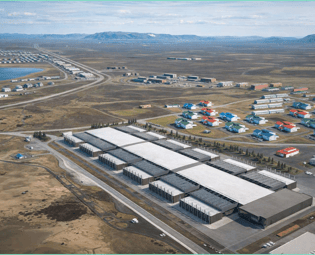
At Verne, that is how we think about Natural Intelligence: understanding the characteristics of each location, then applying engineering judgement to make the best use of them. In Iceland and Finland, the starting point is renewable power and a naturally cool climate. In France, it is a large, low-carbon electricity system close to substantial customer demand.
Public opposition could become a development constraint
Power will not be the only factor shaping Europe’s ability to grow.
In the US, opposition to data center development has become increasingly organised around electricity prices, water, land use and the local effects of large projects. Europe should not assume that it will follow the same path, but the US experience may provide a template for campaigners, communities and politicians.
This is particularly relevant because the scale of projects is increasing just as the industry becomes more visible. A development measured in hundreds of megawatts will inevitably attract more attention than the smaller facilities around which many planning systems and public expectations were formed.
The risk is broader than opposition to an individual site. If similar disputes emerge across several markets, public acceptance could become a sector-wide constraint alongside power and planning.
That requires a response from the industry as a whole. Trade bodies, industry groups, operators and customers need a stronger shared account of why digital infrastructure is required, how it uses resources and how its economic effects should be assessed.
Individual operators must then apply that account locally. Every project has a different planning context, resource profile and relationship with its surroundings. Industry-wide evidence cannot replace local engagement, but neither should each operator attempt to answer a Europe-wide debate alone.
For Verne, acting as a good neighbour is part of Natural Intelligence. It means understanding the local context and making informed decisions about design and operation. The broader challenge, however, belongs to the whole sector.
Delivery will decide the market
Europe has the demand, investment appetite and engineering capability to expand its role in global AI infrastructure.
Its position in 2027 will depend on execution.
Energy policy must recognise the scale and location of new demand. Grid processes must prioritise projects capable of being delivered. European initiatives must translate political ambition into operating infrastructure. The industry must also avoid allowing public debate to be shaped entirely by the most difficult examples from elsewhere.
Europe currently represents a considerably smaller share of global data center electricity consumption than the US. Pressure on the American market creates an opening, while initiatives such as the AI Gigafactories framework provides a mechanism for building more European capability.
The opportunity is real. Capturing it will depend on whether Europe can convert the advantages of its locations and energy systems into infrastructure on a timetable that meets customers demand.